The objective of this project is to use natural sampling, laboratory experiments, and numerical modeling to determine if parasitoids could be used as a method to control harmful algal blooms in the Mediterranean.
Natural Sampling
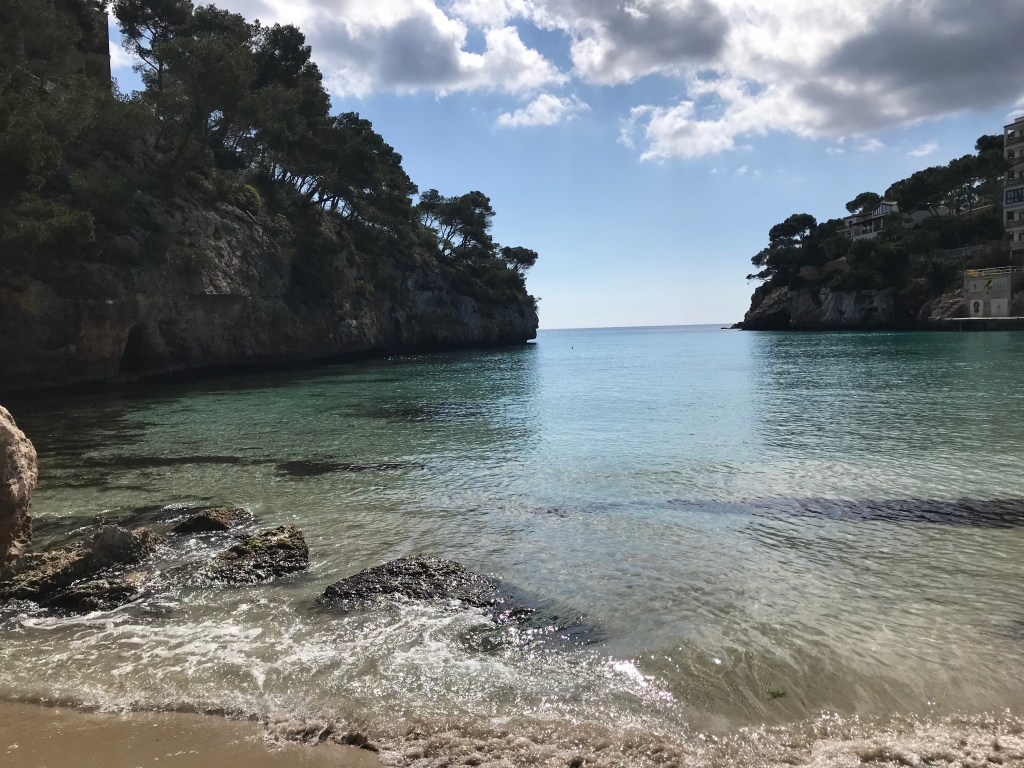
Natural sampling for this project involved going to Cala Santanyí to sample plankton populations in the water column. We go to the beach, collect water and sediments, and then return to the Mediterranean Institute for Advanced Studies to process the samples. We sampled more frequently when there was an algal bloom (every other day) and more frequently in summer (at least once every 5-10 days when there was no algal bloom). We collected samples from June 2021 to October 2022.
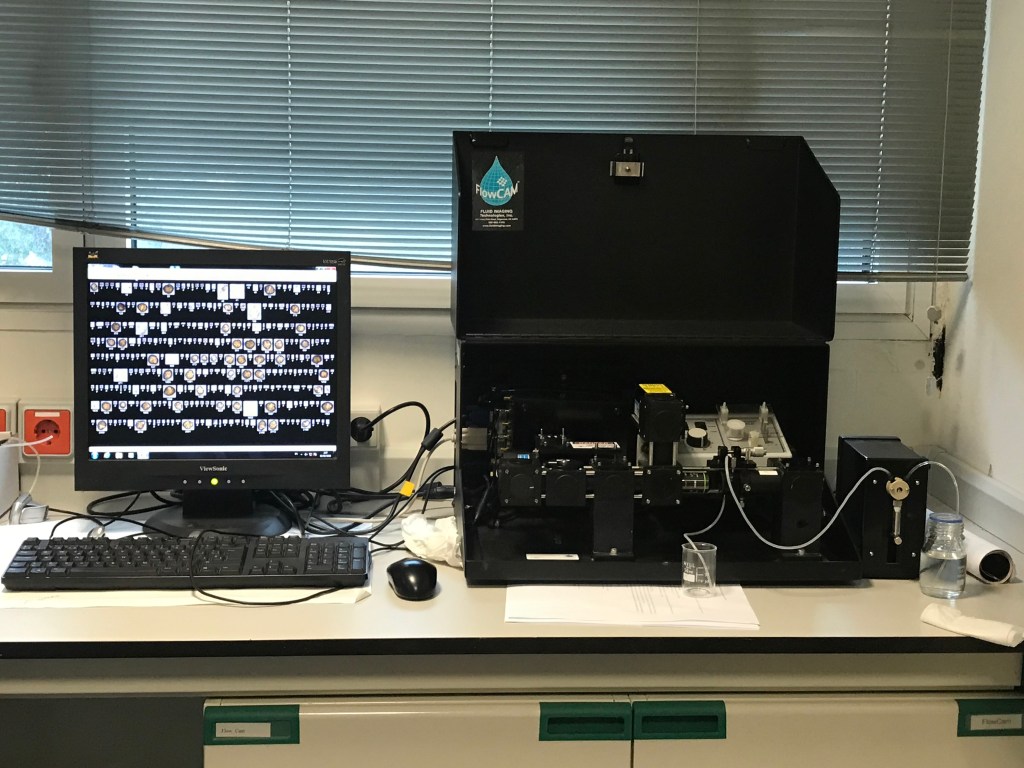
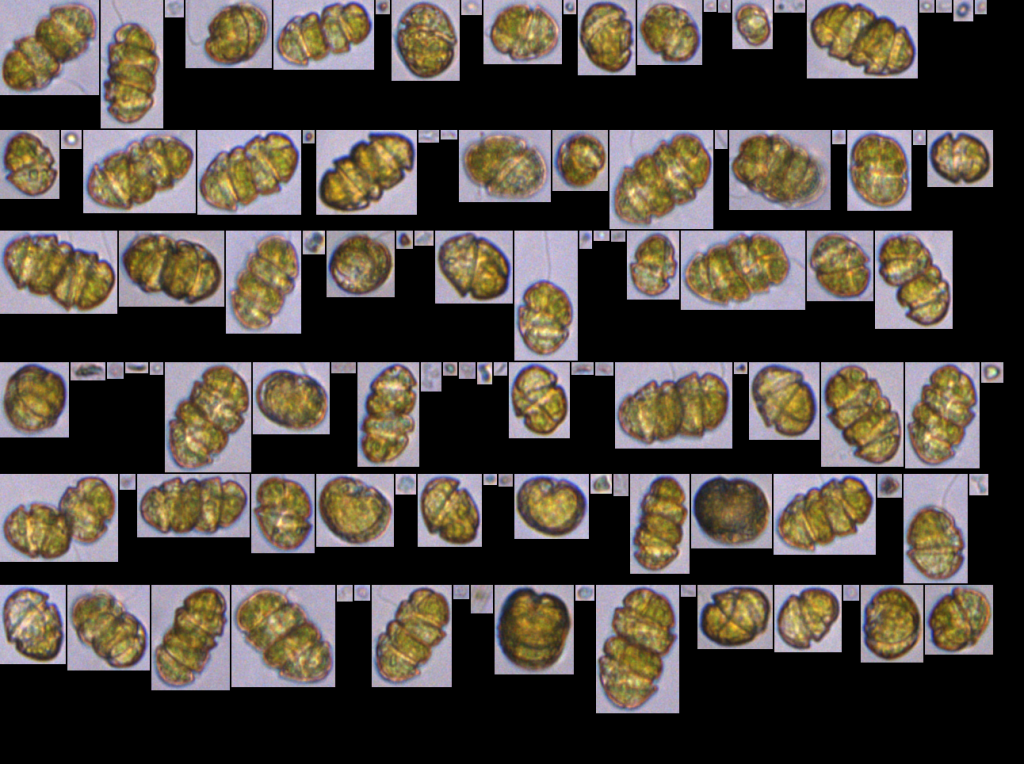
We collected a lot of images of plankton using an instrument called the FlowCAM (Yokugawa Fluid Imaging Technologies, Inc.). This instrument combines image microscopy with flow cytometry, meaning we use the instrument to create a flow, which allows the sample to move past a microscopic camera, which takes pictures of the plankton moving past. We are working on using the images to identify organisms within the 5-100 um size community, including identifying the species of dinoflagellates responsible for the blooms and later-stage infections of perkinozoid parasitoids. We also took images of particles in the sediments to find sporangia because sporangia sink out of the water column.
Laboratory Experiments
The goal of the laboratory experiments is to look at the interactions between perkinozoid parasitoids and dinoflagellates on an individual level. Both dinoflagellates and parasitoid zooids swim. However, no one has previously quantified the swimming behaviors of parasitoid zooids or the individual movement behaviors of dinoflagellates interacting with parasitoids. Our goal is to quantify these behaviors on an individual level to get a better understanding of the interactions between dinoflagellates and the perkinozoa parasitoids.
Modeling Interactions
The third portion of this experiment will be to use a model to scale up the individual interactions between parasitoids and dinoflagellates quantified in laboratory experiments to match population interactions observed in Cala Santanyí. In particular, we are interested in trying to understand how parasitoids influence dinoflagellate blooms and if parasitoids could be used as a method to control harmful algal blooms.
 Parasitoid-Dinoflagellate Interactions of Mallorca